
Not every treatment works equally well for hairline recession specifically. The hairline is the hardest area to treat — it has the highest androgen receptor density and responds less predictably than the crown. Here's how the options compare for frontal/temporal recession.
Treatment Comparison Grid
| Feature | Procerin | Finasteride (Rx) | Minoxidil | Procerin Rx |
|---|---|---|---|---|
| Addresses DHT (root cause) | ✓ | ✓ | ✗ | ✓ |
| Hairline-specific evidence | Moderate | Moderate | Weak | ✓ (combo) |
| No prescription needed | ✓ | ✗ | ✓ | ✗ |
| No sexual side effects | ✓ | ✗ (1–2%) | ✓ | Low risk |
| Oral + topical dual system | ✓ | ✗ | ✗ | ✗ |
| IRB clinical study | ✓ | ✓ (FDA) | ✓ (FDA) | ✓ |
| Money-back guarantee | ✓ (90 days) | ✗ | ✗ | ✓ (60 days) |
The Hairline Problem
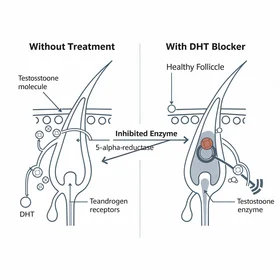
Important context: most clinical trials measure results at the crown/vertex, not the hairline. This is because the crown responds more predictably to treatment. The hairline is harder to treat and harder to measure. This doesn't mean treatments don't work for the hairline — it means the evidence is less specific.
What we know from clinical data and dermatological practice:
- DHT blockers slow hairline recession effectively in most men — this is their primary value for the hairline, even if regrowth is less dramatic than at the crown
- Minoxidil is less effective at the hairline than the crown — many dermatologists consider it an adjunct rather than primary treatment for frontal recession
- Combination approaches (DHT blocker + growth stimulator) show the best results for hairline maintenance and modest regrowth
- Hair transplant surgery is the most reliable way to restore a hairline that's significantly receded — but requires stable ongoing DHT management to preserve non-transplanted hair
Recommended Approach by Stage
| Your Stage | Goal | Recommended Start |
|---|---|---|
| Mild temple recession | Prevention — stop it here | Procerin OTC (oral + XT topical). Low risk, addresses DHT early. |
| Noticeable M-shape | Halt + stabilize | Procerin OTC + minoxidil. Or Procerin Rx topical for prescription strength. |
| Deep recession | Stop further loss | Procerin Rx or oral finasteride + minoxidil. Consider transplant consultation. |
| Advanced (Norwood V+) | Preserve remaining + surgical | Maximum medical therapy + transplant evaluation. Set realistic expectations about non-surgical limits. |
What to Expect from Treatment
For hairline recession specifically:
- Months 1–3: Reduced shedding. The recession should slow or stop.
- Months 3–6: Some thickening of miniaturized hairs at the recession edge may be visible.
- Months 6–12: Best window for any visible improvement in hairline density.
- Year 1+: Maintenance. Ongoing treatment preserves gains; stopping means gradual return to pre-treatment trajectory.
Hairline regrowth is more modest and less predictable than crown regrowth for every treatment. The realistic goal for most men is stopping further recession and thickening the existing hairline — not regrowing a teenage hairline.
Who Should Consider Each Approach
Not every treatment is right for every person. The best approach depends on your stage of recession, your tolerance for side effects, and your goals. Here is a frank assessment of who each option is best for — and who should look elsewhere.
Natural DHT Blockers (e.g., Procerin OTC)
Best for: Men in early-stage recession (Norwood II–III) who want to address DHT without prescription medication. Ideal for men who are proactive — noticing the first signs of temple deepening and willing to commit to a daily regimen before the loss becomes advanced. Also right for men who have concerns about the sexual side effects associated with oral finasteride and prefer a supplement-based approach with clinically studied natural ingredients like saw palmetto and beta-sitosterol.
Not ideal for: Men with advanced recession (Norwood V+) who need aggressive intervention, or men looking for rapid dramatic regrowth. Natural DHT blockers work best as a preventive and stabilizing measure — they are not a substitute for prescription treatment in cases of significant established loss.
Prescription Finasteride
Best for: Men with moderate to advanced recession who need potent systemic DHT reduction and are comfortable with prescription medication. Ideal for men who have tried OTC approaches without sufficient results, or whose recession is progressing despite natural DHT management. Right for men whose dermatologist has confirmed androgenetic alopecia and recommended pharmaceutical intervention.
Not ideal for: Women of childbearing age (contraindicated due to teratogenic risk), men who are unwilling to accept a 1–2% risk of sexual side effects, or men with only very mild recession who may achieve adequate results with less aggressive approaches first.
Topical Minoxidil
Best for: Men looking for an accessible, OTC growth stimulant to use alongside a DHT blocker. Best results when combined with DHT management rather than used alone for hairline recession. Ideal for men at any stage who want to maximize their regimen without adding a prescription.
Not ideal for: Men seeking a standalone solution for a receding hairline. Minoxidil does not address DHT — the root cause of hairline recession — and its effectiveness at the frontal hairline is weaker than at the crown. Using it alone for hairline-specific loss often produces disappointing results.
Hair Transplant Surgery
Best for: Men with stable, established recession (typically Norwood IV+) who want a permanent restoration of the hairline. Ideal for men who have been on DHT management for at least 12 months (to establish a stable baseline), have realistic expectations, and can afford the $4,000–$15,000 cost. Right for men who want a definitive cosmetic improvement rather than incremental medical gains.
Not ideal for: Men whose recession is still actively progressing without medical management, men under 25 whose hairline pattern may not be fully established, or men who are unwilling to continue DHT-blocking treatment after the procedure (transplanted hair survives, but native hair continues to recede without ongoing management).
Other Options to Consider
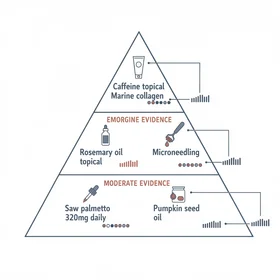
Beyond the treatments above, consider these alternatives: PRP therapy (platelet-rich plasma injections, growing evidence but expensive at $500-$2,000/session), low-level laser therapy (FDA-cleared but limited evidence), or combination approaches that pair natural and prescription treatments. Some men choose to combine Procerin OTC capsules with topical minoxidil as an alternative to prescription finasteride. For men interested in a fully natural protocol, our natural regrowth guide lays out the evidence-based steps. And for men weighing whether a receding hairline is actually progressing or just maturing, our early signs checklist explains how to tell the difference.
Deciding between a DHT blocker and minoxidil is one of the first choices men face. For a full mechanism-level comparison of how these two approaches differ and when to use each, see how DHT blockers compare to minoxidil.